

Observations from BIOCHINA2025
A vibrant synthetic biology and biotechnology ecosystem is brewing in China

There’s been a lot of talk about the rising tide of China’s biopharma community, but not as much about its counterpart in synthetic biology. To learn about this ecosystem, I’ve been traveling to China and Taiwan almost every month since the end of 2024 to get an on-the-ground viewpoint, have toured more than a dozen facilities, and have met multiple entrepreneurs.
Currently wrapping up a trip to a 30,000 person (biopharma-oriented) conference and trade show, BIOCHINA2025. More thoughts later, but some current observations strictly from this conference, and oriented towards Chinese equipment, research tools, reagents, and synthetic biology:
Everything in China is bigger. Scale is a thing.
The Chinese ecosystem is rapidly growing from the bottom-up. You can see this visually walking through the exhibition halls. If there is a Chinese-made product, it is at least 5x cheaper than its American counterpart. This applies across the spectrum, from reagents to equipment.
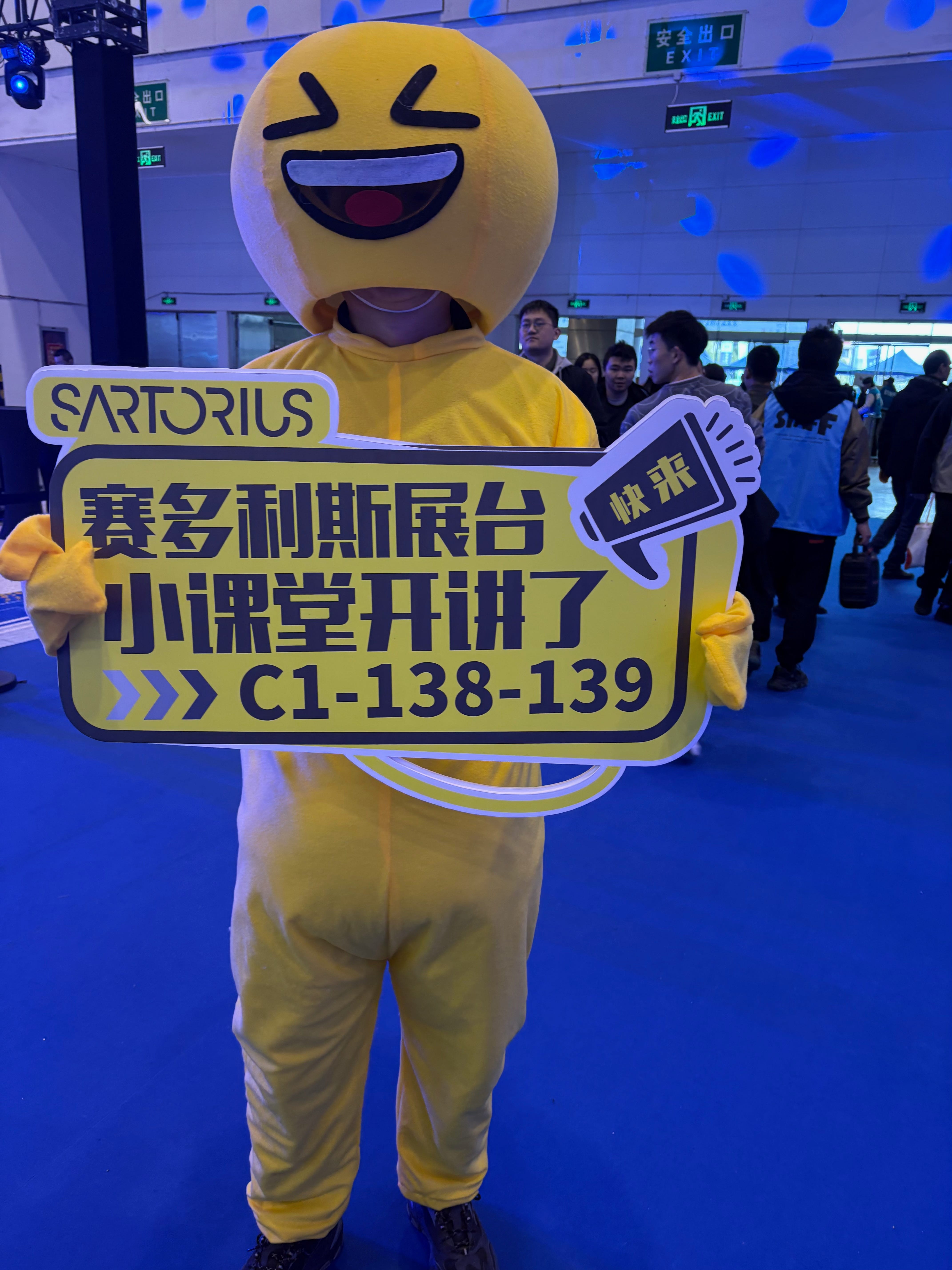
For equipment, China has tons of suppliers that are making things that require steel or physical engineering. As an example, while Sartorius has a highly visible presence here, I counted at least 10 companies that have similarly designed bio-fermentation units at the 5x price differential ($14,000). These are advancing as well beyond traditional single bio-fermentation to more advanced models (eg. Ambr 250-like instruments for $165,000). Anything that is in the fermentation chain has a Chinese made counterpart, be it homogenizers or downstream processing equipment. The same logic applies to traditional wet lab equipment: centrifuges, shakers, incubators, freezers and fridges, etc. When these are re-engineered, they have many more bells and whistles than the Western counterparts in the same vein as a modern Chinese EV. However since they are so new there is less on-the-ground experience with their use. This seems like a scary moat to rely on however for the incumbents…
There are far fewer vendors that sell “harder-technologies” (-omics, -optics). Vendors present such as Agilent and Unchained Labs are present and face less, if any, competition. It’s unclear if this is a time-constrained issue or technology issue, but my guess is it’s the former. Mass spectrometry and analytical equipment seem particularly missing.
The one exception seems to be liquid handling robots that rival American Biomeks and Hamiltons, for which there many. Interestingly for the liquid handling category though costs are non-competitive to OpenTrons ($30,000 for basic setups from Megarobo), but very much so to the big players. Megarobo and Ximaging, two big players, have built out Biofoundries for SIAT (likely the world’s largest) and even InSilico Medicine’s foundry (which does their R&D in China).
As expected, plastics (pipette tips, flasks, conical tubes, etc…) are exponentially cheaper in China. One vendor was selling a 50-pack of 50 mL conical tubes for $2.50 list price! Compare this to $400+ from Corning.
Reagents and laboratory-use chemistry also have multiple Chinese vendors represented. From enzymes to chemicals to purified proteins and antibodies, there are multiple companies that sell these materials in catalog form, at the similar 5x price differential to a NEB or Sigma-Aldrich (both of which were not represented).
The services and CMO/manufacturing area are quite competitive. While biopharma specific, I also counted at least 10 companies selling, for example, semaglutide and other APIs, or support for mRNA manufacturing, all GMP or cGMP. Many of these companies do service work as well, be it traditional or cGMP protein manufacturing or raising antibodies.
Services we traditionally prescribe to synthetic biology, such as DNA synthesis and protein synthesis, also exist in droves. While there is no Twist at the conference, its competitors Tsingke, Genscript (China), and Synbio Technologies (China) are all present. For raw DNA, the 5x price rules don’t apply: fragments remain $0.07/bp like Twist. For things that need labor, such as plasmids and cloning, China remains cheaper. However, surprisingly few players in sequencing, but that may be a function of the conference.
Finally, for so much hype around Chinese biopharma there are very few Western faces and name tags here.
Why does this matter? Having spent time building in synthetic biology, I’ve always believed strong infrastructure and strong ecosystems are critical to moving products to market. It serves to keep costs down and bridge our field’s unique mix of technology and market risk. The Chinese ecosystem is growing from the ground up, with clear (revenue-driven) cost competition that will serve to benefit Chinese companies and consumers. I wonder: can the American synthetic biology ecosystem benefit from this as well in a way that mutually advances both countries’ interests?


Can you share links to these 5x discounted Chinese equivalent products?
Are you going in 2026 again?